Soderbergh’s latest “horror” makes its own presence known long after you leave the theatre.
SPOILERS
Runtime: 1 hr 24 mins
Certification: 15
Genres: Drama, Horror, Thriller
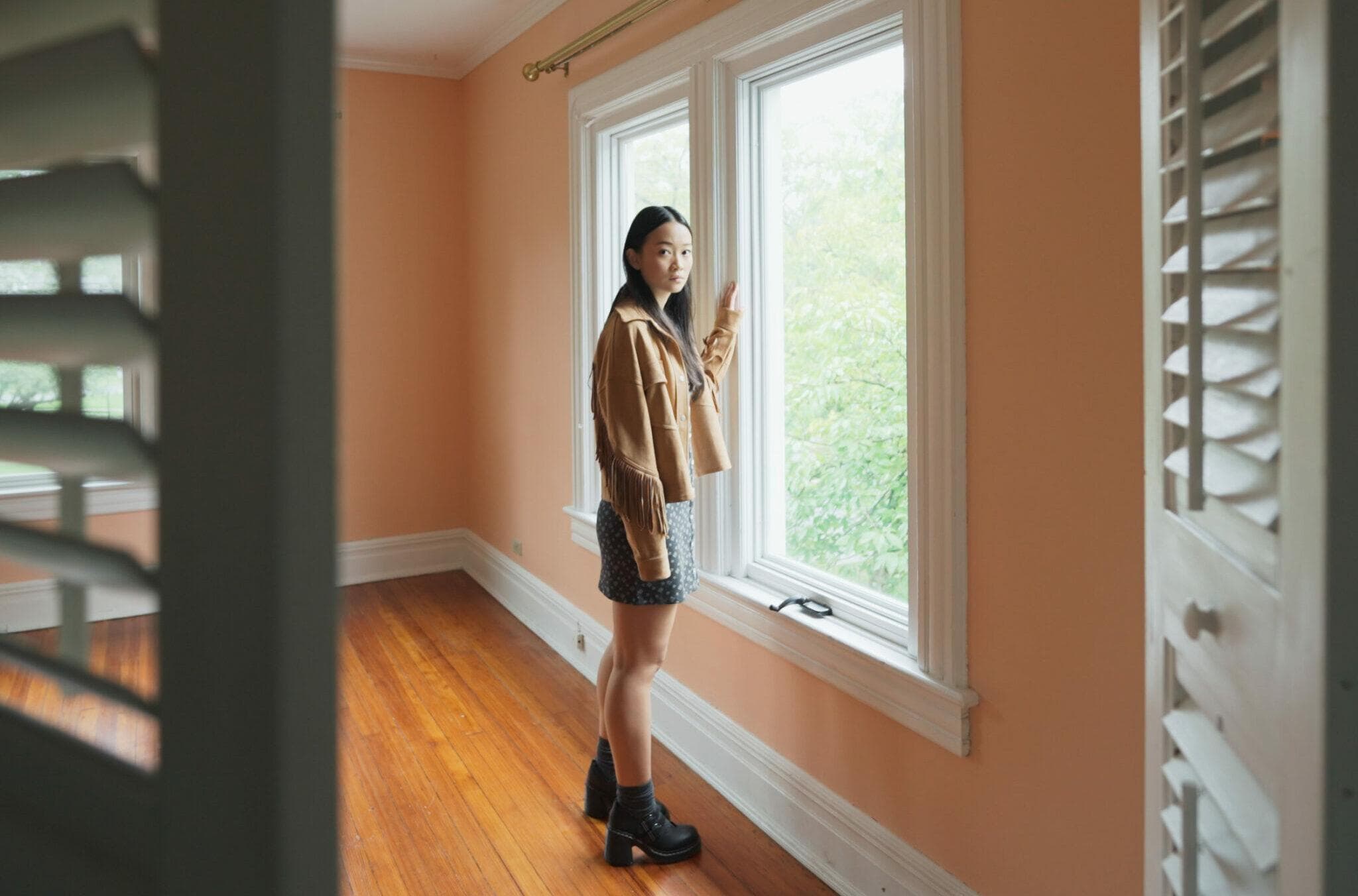
Director Steven Soderbergh is known for not sticking to one genre – having Magic Mike and Erin Brockovich in your wheelhouse is definitely considered range. Though, whilst I don’t think we can add ‘horror’ to that list just yet, Presence is still a successful thriller by being a quietly unsettling and deeply emotional exploration of grief, dysfunction and how the past haunts.
Presence centres on a family of four, the Paynes, with a distanced and distracted mother, Rebekah (Lucy Liu), a caring and concerned father, Chris (Chris Sullivan), a successful and spoiled son, Tyler (Eddy Maday), and an intuitive but ignored daughter, Chloe (Callina Liang). You soon learn that there is another entity in this house – the Presence – which is also who the viewer watches this story unfold from. The ‘ghost-eye-view’ puts you right in the centre of the pain, anguish and complexity of this family. You become an invisible fly-on-the-wall. Yet, it leaves you shouting at the screen, wanting to help.
Liu and Liang give great performances, where we are never entirely sure of their intentions, but we know both have strong convictions. The same cannot be said of Maday and West Mulholland (playing Ryan) who couldn’t deliver the same level of strength in their acting, instead just falling on the douchey high schooler trope found in less serious genres, where line delivery fell flat. Ryan’s character required an innate evil that is well masked, but instead he was evil and we all knew it.
Yet, the stand out performance in Presence is Sullivan – he portrays the troubled but warm father who wants to keep it together for his children even though life is falling apart around him. He is an emotional anchor to a tumultuous family. There is a subtlety to the way he approaches each scene, a sincerity that means you can’t help but feel what he feels and for whom you desperately hope there is a promising outcome.
The acting is only emphasised through Soderbergh’s signature cinematography style – natural lighting, long takes, uncomfortable pauses and a stripped-down aesthetic that makes everything feel eerily real. There’s an intimacy to the way the camera lingers on faces, on silence, on the empty spaces between people. There are times when it’s uncomfortable – you can’t help so you want to look away – but you can’t, because The Presence doesn’t (well, not always).
Whilst I enjoyed Presence throughout, it comes into its own in the final minutes. It will leave you questioning the entire 75 that preceded it and immediately rushing to Google “the presence ending explained?!?”. It may even lend itself a rewatch, to be seen through knowing eyes – the eyes through which The Presence itself was watching the Paynes.
For all its brilliance, Presence leaves a few things frustratingly unexplored. Rebekah’s mysterious financial fraud is hinted at but never fully explained. Tyler’s story arc feels slightly underdeveloped. Some of the film’s biggest emotional punches land without full follow-through. But then again, perhaps that is a reflection on the fact that life does not tie up neatly in a bow. Or, Soderbergh left some scenes on the cutting room floor in favour of a sub-90 minute movie.
Presence isn’t your typical ghost story – it’s something quieter, more unsettling, and ultimately more affecting. With immersive cinematography, masterful direction, emotional performances and an ending that refuses to be forgotten, it’s a film whose questions stay with you long after the credits roll. Just don’t expect easy answers.
 Rushes.
Leave a comment